

Who are we?
The history of this small village does not appear in history books or wikipedias, but it remains in the memory of those who have lived and cared for it for so many years.
My grandfather explains to me that he was born in 1930 at home, in the room where he would later sleep for so many years. Ca de Güí, this is the name his house received (and still receives), the place where the whole history of Senet Rural goes back to.
He tells me that when he was a child he used to go to school right in front of his house. The premises, which now serves as a social space and a small health care centre, used to be a small classroom where about fifteen children of different ages shared classrooms, teachers and knowledge. In those days, childhood was very short and adulthood began very early. Fourteen was the age to work.
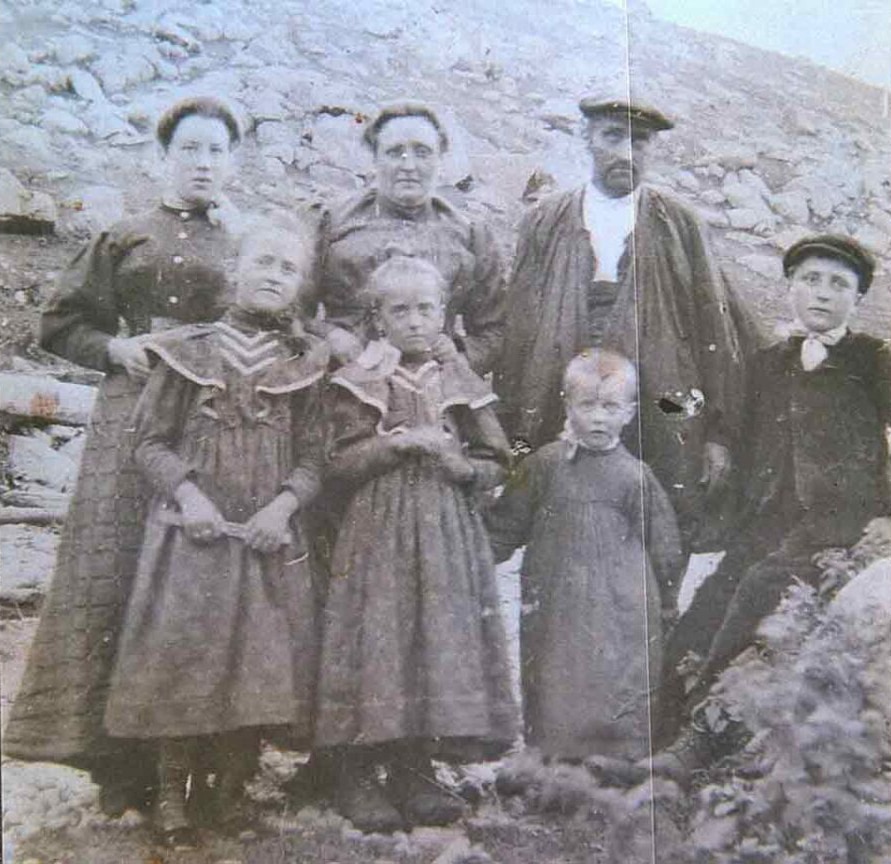

He explains that the Senetins and Senetines were farmers and stockbreeders, but mainly carpenters. They used to cut down trees to make tables and sell them on Fridays at the market in Pont de Suert. With the money they earned, they used to buy their groceries there, because there was no place to buy them in Senet, although they often went to the mill, which was a little more than a kilometre from the village, where each house made its own bread, "and what good bread mother made! The rest of the days were spent tending and grazing the cattle, except for a few special days; they did not only live to work, but also liked to celebrate from time to time! On Sundays, as expected, they went to mass without fail, it was the meeting point with the whole village. They also celebrated the feast of Sant Antoni, on 17th January, where each house would show off its livestock in the same meadow. At Easter, the young people of the village used to sing in the main street in exchange for eggs and black pudding given to them by the villagers as a token of their gratitude. The most important celebration, however, was on the 24th of June, San Juan, the town's main festival, when after the fallas were brought down, everyone danced in the town square, La Serradora. On the same day, the next year's steward was appointed, who would be in charge of starting the dance. The last important festival of the year was the 16th of August, which they celebrated on the day of Sant Roc and danced a paso doble while the accordion played. "We liked dancing very much, we did it as much as we could", says the grandfather.
It was at one of these dances that she met her grandmother, a young girl with seven siblings who had experienced the misery of the post-war period from a very young age. She was born in Nerill, a small village in the Ribagorzano region, but soon settled in Senet to live with her grandfather.
Ca de Güí was large, with three floors and many rooms; it had a tradition of being the dormitory of many Galician and Andalusian workers who were building in those days. hydroelectric power plants. Grandmother, then, took over and looked after the house and the guests while grandfather looked after the cattle and worked at Enher, an ENDESA hydroelectric power station that began operating in the 1950s and provided work for many Senetinos and Senetinas.
Ca de Güí was not the only country house in the village, there were two more: Casa Lluís and Casa Mossèn Joan. For twenty-two years, the three houses housed the workers who worked on the construction of the old Viella tunnel. Then, the house saw the opportunity to offer a canteen service to attend those workers and that's how Casa Güí became the village bar. The grandmother explains to me that at midday, when the workers arrived, she would prepare for them "a chickpea stew with bacon and whatever she could find in the fridge". Later, when they enjoyed economic stability, grandfather and grandmother had a mother, an only child who was raised in the village until she was eighteen. With the rural exodus, mountain tourism became more and more popular with people who lived in the city and wanted a change of scenery, and over the years, grandma had her regular and reliable customers. At the end of the 70s they sold their remaining livestock and demolished the cow yard and part of the hayloft that grandfather had built years ago; in that space they built some flats, right next to the house, to be able to accommodate more people. The farmyard became a garage and part of the haystack was converted into six flats; the other part of the haystack remained intact, occupied by a few chickens and all of grandfather's farm tools.


They say that childhood is sometimes longer than life. In my case, summer was always longer than the rest of the school year. I spent it in Senet, with my mother, my father, my sister, the yaya and the yayo. The freedom that that village offered me (having nothing and at the same time having everything) was immense, every day I had many possibilities. I still remember when grandma was working and I was very little, the house was always full of people, upstairs and downstairs. They greeted and asked for her, Mrs. Maria, they called her. The chats they had with her were almost longer than the time they spent with her. Some of these six flats were in operation for a few years, but with age, the two of them could not stand the weather conditions in the village and so they decided to close them and also leave the country house they lived in to go and retire in the city, Lleida, where their daughter, my mother, lived. Over time, the village became a breath of fresh air for the family and the house, a temple that grandfather and grandmother had built with a lot of effort and love. In 2019 we had to say goodbye to the remaining part of the haystack where grandfather kept the tools and so many memories, we had to tear it down. So it was that when we demolished it, my father and I saw that it was a good opportunity to restore the garden outside the house and the six flats that were practically intact since grandma had had them built, in order to give life to what our grandparents had created and imagined one day. Thanks to the work of many people (architects, workers, managers, designers...) in 2022 we started this family project: rural flats for all those who want to enjoy the Pyrenees and get to know the village of Senet. We do it with great enthusiasm and appreciation, so we wanted to share what it means to us. Nowadays, the grandfather is ninety-two years old and the grandmother is eighty-one and they still live in Lleida in good health. This year they wanted to go up to the village to see how part of Ca de Güí became Senet Rural. Andrea, May 2022
OUR ADDRESS
Senet Rural
c/ Santa Cecília, nº26,
Senet de Barrabés 25553 Lleida
(42º33'27.5″ N 0º45'10.0″E)CONTACT
MORE INFORMATION
-


